Is an IP rating enough to choose a gripper for coolant exposure?
An IP label alone does not confirm coolant compatibility. Match the actual liquid, exposure and assembled configuration to the proposed model's documentation.
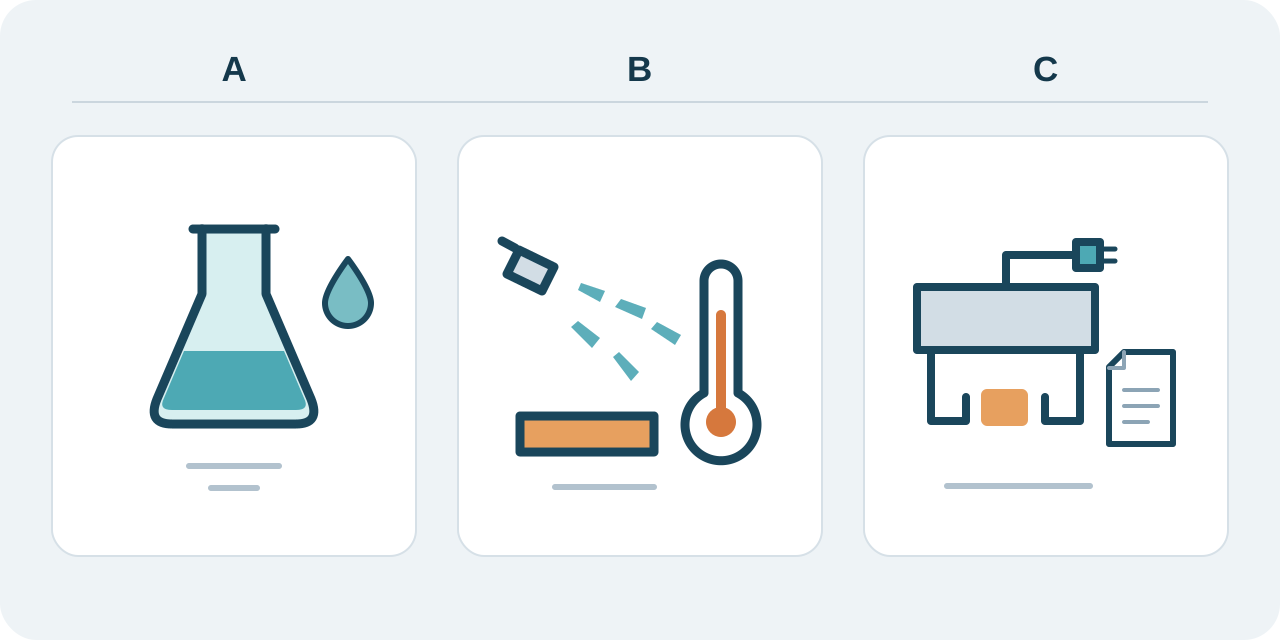
Read the conditions beside the IP label
No. An IP label alone does not establish compatibility with your particular coolant or cleaning liquid. The manufacturer's conditions for the selected product still matter.
For example, SCHUNK lists IP67 for its MMS 22-A sensor when plugged in, but separately says it cannot guarantee operation in contact with other media such as coolant, acids or bases. This is a sensor example, not a rating for a gripper body or CBOXTEC equipment.
A gripper manual can add separate exclusions
Robotiq's archived Hand-E manual lists IP67 together with operating-temperature and non-condensing humidity limits, and excludes corrosive liquids or gases in §3.3, Table 3-2 on printed page 16. Its revision list begins with 2022/01/10; use it as a documented example, not the current specification for every Hand-E variant.
The purchasing lesson is to read the whole environmental specification. These examples do not supply a CBOXTEC temperature limit, chemical-resistance rating or approval for a particular coolant.
Describe what will actually touch the assembly
Our selection advice is to give the supplier the coolant or cleaner's product name, concentration and available technical or safety data sheet. Say whether exposure comes from residue on a carried part, repeated splashes, a directed spray, immersion or cleaning.
Include exposure duration and frequency, ambient temperature and the part's temperature at pickup. Ask which conditions the proposed model's documentation covers. An ambient-temperature limit alone does not answer a question about contact with a hot part.
Ask about the assembled configuration
Request a written answer for the proposed gripper, fingers, sensor, connectors and cables, including the permitted cleaning method and any exclusions. The plugged-in condition in the SCHUNK example is a reason to check installation conditions; it is not a universal assembly rule for other products.
CBOXTEC supplies robot arms and grippers. Send the actual exposure conditions with the model enquiry so that suitability can be discussed against the available documents. A loading application description does not establish coolant compatibility or a complete-cell delivery commitment.